- Hashed Out
- Posts
- Will Web3 Replace LinkedIn?
Will Web3 Replace LinkedIn?
How professional identity may evolve beyond platform profiles

Scott Kasten
March 13, 2026
When people talk about the future of Web3 and work, one question comes up frequently:
Could blockchain technology replace LinkedIn?
At first glance, the idea sounds unlikely. LinkedIn has more than a billion users and has become the default place for professional networking, job discovery, and digital resumes. It has enormous network effects and deep integration into the hiring process.
So the short answer is probably no—Web3 is unlikely to replace LinkedIn outright.
But the longer and more interesting answer is that Web3 may reshape the foundation of professional identity online, changing how credentials, reputation, and work history are verified and shared across platforms.
In that world, LinkedIn might remain an important interface—but the underlying data that defines your professional identity may live somewhere else.
What LinkedIn Actually Solved
When LinkedIn launched in 2003, it addressed a genuine gap in the early internet.
Professional identity was largely offline. Resumes lived in documents. Professional networks were maintained through personal contacts and email. Verifying experience or credentials often required phone calls and reference checks.
LinkedIn created a centralized digital layer for professional identity. It allowed people to:
• maintain a public professional profile
• map professional networks
• display work history and credentials
• receive endorsements and recommendations
In doing so, LinkedIn became something like a digital resume for the internet era.
But it also introduced an important limitation: your professional identity became tied to a specific platform.
The Limits of Platform-Owned Identity
Today, much of a person’s professional identity is distributed across platforms.
Your career identity may include:
• a LinkedIn profile
• a portfolio site
• credentials issued by universities or training programs
• references from employers
• freelance reputation on platforms like Upwork or Fiverr
• contribution records in tools like GitHub
Each piece of that identity lives inside a different organization’s system.
The result is that your professional reputation is fragmented and often difficult to verify. Employers rely on interviews, references, and manual credential checks because there is no universal way to confirm a person’s work history or achievements.
This is the problem that many Web3 identity projects are trying to address.
The Idea Behind Web3 Professional Identity
At its core, the Web3 approach to identity attempts to move professional credentials and reputation away from platforms and back to individuals.
Instead of your identity living inside LinkedIn or another service, it could exist as a portable record you control.
Platforms could still display that information—but they wouldn’t own it.
To make that possible, several technical standards have emerged that allow identity and credentials to be verified without relying on a central database.
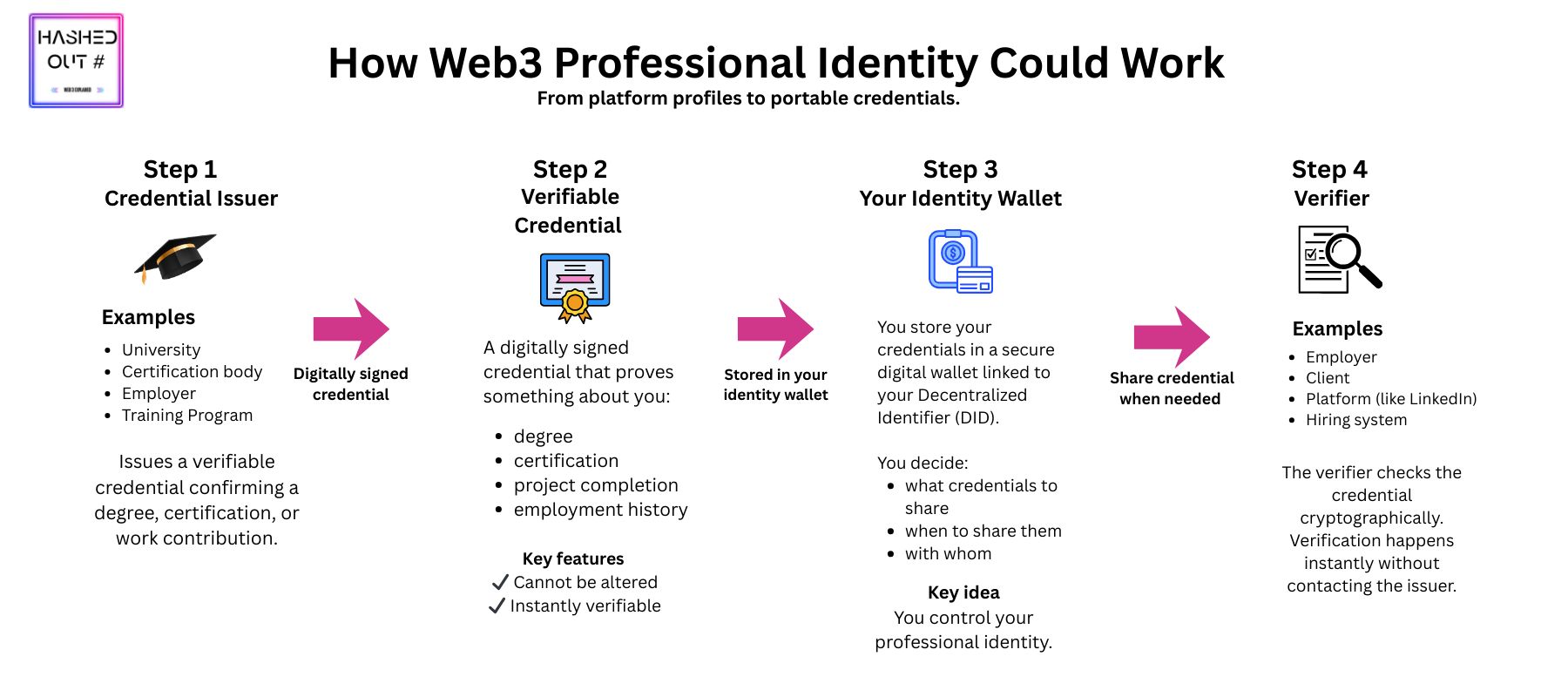
The two most important building blocks are Decentralized Identifiers (DIDs) and Verifiable Credentials (VCs).
Decentralized Identifiers: Identity You Control
A Decentralized Identifier, often called a DID, is a digital identifier that a person or organization controls directly rather than one issued by a platform.
Today most online identity works like this:
• Google issues your Google account
• LinkedIn issues your LinkedIn profile
• Facebook issues your Facebook identity
Your digital identity lives inside those systems.
A DID works differently. It is created and controlled by the individual and can be stored in a secure identity wallet.
The DID acts as a persistent identifier that allows someone to prove ownership of credentials or accounts without relying on a specific platform.
Importantly, a DID does not contain personal data itself. Instead, it provides a cryptographic way to verify that a person controls an identity and the credentials associated with it.
You can think of it as a digital identity anchor that belongs to the individual rather than to a platform.
Verifiable Credentials: Credentials That Can Be Proven
If a DID establishes identity, Verifiable Credentials establish proof.
A Verifiable Credential is a digitally signed credential issued by a trusted organization. It can represent things like:
• university diplomas
• professional certifications
• training credentials
• employment verification
• licenses or professional qualifications
Unlike traditional documents or PDFs, these credentials include cryptographic signatures that allow anyone to verify their authenticity instantly.
Instead of sending a diploma that must be checked manually with a university, a graduate could share a credential that an employer’s system verifies automatically.
The process is both faster and harder to falsify.
How DIDs and Credentials Work Together
When these two technologies are combined, they create a new model for professional identity.
The process works roughly like this:
A person creates or controls a decentralized identifier (DID).
An organization issues a verifiable credential tied to that identifier.
For example, a university might issue a diploma credential to the graduate’s DID.The credential is stored in the individual’s digital wallet.
When applying for a job or opportunity, the individual shares the credential, and the receiving organization verifies it instantly.
The key shift is that the individual holds the credential, rather than the issuing institution or platform.
Over time, this could allow professionals to accumulate a portable set of verified credentials that move with them throughout their careers.
What Is Real Today
Although the full vision of Web3 professional identity is still emerging, several pieces of this system already exist in practice.
Verifiable Diplomas and Credentials
Some universities and organizations have already begun issuing verifiable digital credentials.
MIT, for example, has experimented with issuing blockchain-based digital diplomas that graduates can store and share with employers. Instead of contacting the university to confirm a degree, an employer can verify the credential instantly.
Similar approaches are being explored for professional certifications and training programs.
Enterprise Identity Systems
Large companies are also experimenting with decentralized credential systems.
Microsoft’s Entra Verified ID platform allows organizations to issue digital credentials for things like employment verification, training completion, or professional qualifications.
Individuals can store those credentials in digital identity wallets and present them when required for hiring, onboarding, or compliance processes.
Identity Infrastructure Projects
Other companies are building the infrastructure that allows organizations to issue and verify credentials.
Dock Labs, for example, provides tools that allow universities, certification programs, and institutions to issue decentralized credentials that individuals control.
At the same time, open-source initiatives hosted by the Linux Foundation Decentralized Trust ecosystem are developing standards that ensure these identity systems can work across platforms and organizations.
The goal is interoperability—ensuring that credentials issued in one system can be recognized in another.
Global Payments for Work
Another area where blockchain already intersects with careers is payments.
Freelancers and remote professionals working across borders often face delays or fees when receiving international payments.
Blockchain-based payment systems allow funds to move globally with faster settlement times and fewer intermediaries. Many freelancers and digital creators already use these systems when working internationally.
Why LinkedIn Probably Isn’t Going Away
Even if these identity technologies continue to develop, LinkedIn still has powerful advantages.
Professional platforms benefit from enormous network effects. The value of the network grows as more people participate. LinkedIn also provides tools for hiring, job discovery, and communication that go far beyond identity alone.
Because of this, the more likely outcome is not replacement but integration.
Platforms like LinkedIn may eventually incorporate verifiable credentials, identity wallets, or portable reputation systems rather than competing with them.
In that scenario, LinkedIn would become one interface for viewing professional identity rather than the system that stores it.
The Real Shift
The deeper change isn’t about replacing LinkedIn.
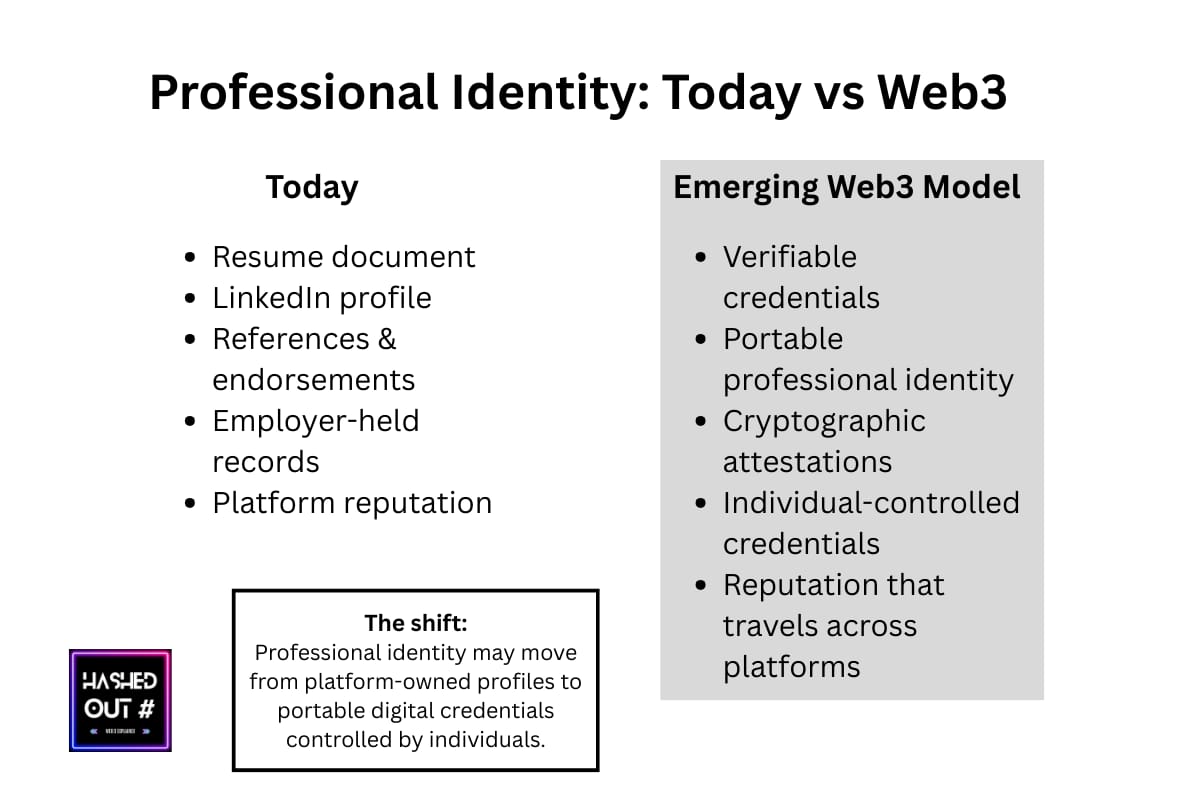
It’s about shifting professional identity from platform-owned profiles to portable identity records controlled by individuals.
Today your career identity lives inside a platform.
In the future, it may live in a credential wallet that platforms can read but not control.
If that shift happens, LinkedIn may still exist—but the foundation of professional identity on the internet will have changed.
Stay ahead of the curve with the latest in Web3 culture and innovation. Subscribe to Hashed Out for exclusive insights, case studies, and deep dives into the decentralized future.
Help Grow Hashed Out And Get Rewarded With Premium Content & Merchandise
If you believe in a more open, fair internet — help us build it, one reader at a time.
Web3 adoption starts with curiosity. Share Hashed Out with someone who’s ready to explore.
You’re not just sharing a newsletter — you’re inviting someone into the future of digital life.
Refer 3 friends and unlock premium content. The more you share the more rewards you unlock, including Hashed Out mugs or tote bags, and exclusive community memberships.