- Hashed Out
- Posts
- The Tokenized World: Stocks, Homes, Art & Ownership
The Tokenized World: Stocks, Homes, Art & Ownership
Tokenization Explained (Without the Hype)

Scott Kasten
April 17, 2026
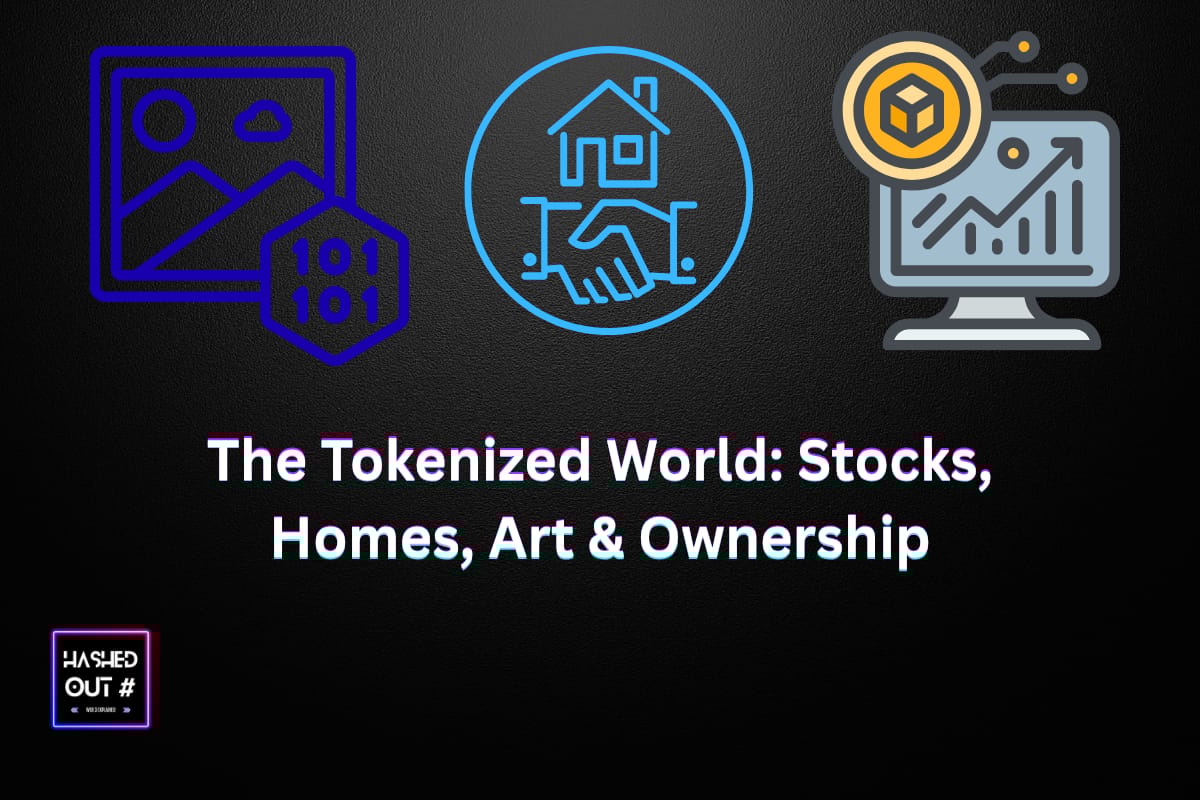
When people hear the word “tokenization,” it can sound abstract or technical.
But at its core, tokenization is simple:
It’s the process of representing ownership of something as a digital record that can be tracked, transferred, and verified.
That “something” can be:
• a share of stock
• a piece of real estate
• a work of art
• a financial asset
• even a membership or right
The concept isn’t entirely new—ownership has always been recorded digitally in some form.
What’s changing is how those records are structured and how easily they move.
Stocks: Ownership Without Layers
When you buy a stock today, it feels instantaneous.
But behind the scenes, the process involves:
• brokerages
• clearinghouses
• settlement periods
• multiple layers of record-keeping
You don’t directly hold the asset—you hold a claim through intermediaries.
Tokenized stocks explore a different model:
• ownership recorded directly on a shared ledger
• faster (potentially near-instant) settlement
• fewer intermediaries between buyer and asset
In theory, this could mean:
• faster transactions
• clearer ownership records
• broader access to markets
But it doesn’t eliminate:
• regulation
• market structure
• the role of institutions
What changes: how ownership is recorded and transferred
What stays the same: the rules governing markets
Reality Check: Do Tokenized Stocks Exist Today?
Yes—but with important limitations.
Several platforms have experimented with tokenized versions of stocks, where a digital token represents ownership or exposure to a real-world share. These systems aim to offer:
• faster trading
• fractional ownership
• access outside traditional market hours
However, for most everyday investors, access is still limited.
Tokenized stocks today are typically:
• offered through specialized platforms rather than mainstream brokerages
• restricted in certain countries due to regulation
• structured in ways that don’t always provide the same rights as direct stock ownership
In other words:
You can access them—but not in the same simple way you would buy a stock through a traditional brokerage account.
What This Means for You
For now, most people will continue to invest through:
• brokerage accounts
• retirement accounts
• traditional markets
Tokenized stocks are better understood as:
👉 an emerging infrastructure experiment
👉 not yet a mainstream investment option
Why They Still Matter
Even if you never buy a tokenized stock, the idea behind them points to a broader shift:
• faster settlement (no waiting days for trades to finalize)
• more flexible access to markets
• fewer layers between investors and assets
These changes could eventually influence how traditional markets operate—even if the end user never sees the underlying technology.
Real Estate: Fractional and Transferable Ownership
Real estate is one of the most illiquid forms of ownership.
Buying or selling property involves:
• legal processes
• title verification
• multiple intermediaries
• long transaction timelines
Tokenization introduces the idea that property could be:
• divided into smaller ownership units
• easier to transfer
• more accessible to a wider range of investors
For example:
Instead of buying an entire property, someone could own a fractional share represented digitally.
This could:
• lower barriers to entry
• increase liquidity
• simplify ownership transfers
But real estate is deeply tied to:
• local laws
• legal frameworks
• regulatory systems
Tokenization can improve record-keeping and transfer—but it doesn’t replace those foundations.
Art and Collectibles: Provenance Made Visible
Ownership in art has always depended on trust. The value of such assets is tied to the provenance of the asset, that is an accurate record of its origin and history.
Questions like:
• Is this authentic?
• Who owned it previously?
• What is its history?
are central to value.
You may have what looks like an authentic VanGogh hanging on your wall. Unless you can show some sort of documented and reliable proof that Vincent VanGogh himself painted that picture, the assumption is that you have a really nice reproduction and not a multi-million dollar piece of decor.
Tokenization allows for:
• a clear, trackable ownership history
• easier verification of authenticity
• digital representation of ownership rights
This is especially relevant in:
• digital art
• collectibles
• limited-edition assets
In these cases, the ownership record itself becomes part of the asset.
But as with other areas:
• value is still determined by markets
• authenticity still depends on trusted sources
Tokenization can improve visibility and trust—and in some cases that can increase value. But it doesn’t create value on its own.
Financial Assets: Faster, More Flexible Systems
Beyond stocks and real estate, tokenization is being explored across financial systems:
• bonds
• funds
• private assets
• commodities
The potential benefits include:
• faster settlement
• programmable ownership
• more efficient markets
For example:
A bond could be issued, traded, and settled on a single system rather than across multiple intermediaries.
This could reduce:
• delays
• administrative overhead
• reconciliation errors
But again, the structure of the financial system still matters.
Tokenization changes the rails, not the rules.
The Pattern Across All of Them
Across stocks, homes, art, and financial assets, the same pattern appears:
Tokenization improves:
• record-keeping
• transferability
• accessibility
• transparency
But it does not change:
• legal frameworks
• market dynamics
• underlying value
The Bigger Shift
The deeper change is not about any single asset.
It’s about how ownership itself works in a digital world.
Historically, ownership has been:
• tied to institutions
• recorded in siloed systems
• difficult to move across boundaries
Tokenization moves toward a model where ownership is:
• more portable
• more standardized
• easier to verify across systems
That doesn’t mean everything becomes liquid or tradable overnight.
But it does suggest that:
Ownership may become more flexible than it has been in the past.
Final Thought
The idea of a “tokenized world” can sound like a dramatic transformation.
In reality, it’s more likely to be gradual.
You won’t wake up one day to a completely new system.
Instead, you may notice:
• transactions settling faster
• ownership records becoming clearer
• assets becoming easier to access
And over time, those small changes may reshape how ownership works—without changing what ownership means. When you do start to see those changes happening you will now be able to more easily spot them and understand them.
Stay ahead of the curve with the latest in Web3 culture and innovation. Subscribe to Hashed Out for exclusive insights, case studies, and deep dives into the decentralized future.
Help Grow Hashed Out And Get Rewarded With Premium Content & Merchandise
If you believe in a more open, fair internet — help us build it, one reader at a time.
Web3 adoption starts with curiosity. Share Hashed Out with someone who’s ready to explore.
You’re not just sharing a newsletter — you’re inviting someone into the future of digital life.
Refer 3 friends and unlock premium content. The more you share the more rewards you unlock, including Hashed Out mugs or tote bags, and exclusive community memberships.